Summary
Slow drains, sewage odours, gurgling toilets and wastewater backing up can indicate that your septic system needs attention. They do not prove that emptying is the only solution: blocked pipes, mechanical faults or a struggling percolation area can cause similar symptoms. Regular desludging removes accumulated solids before they interfere with the system.
For homeowners across Clare, Limerick and Galway, recognising a change early can help avoid a more disruptive problem. The important thing is to investigate the cause rather than wait for an overflow.
What does a full septic tank actually mean?
A working septic tank normally contains liquid. Wastewater enters the tank, solids settle and liquid passes onward for further treatment. Seeing liquid inside is therefore not, on its own, a reason to empty it.
The issue is the accumulation of sludge and scum, or an unusually high liquid level caused by restricted flow. Professional septic tank emptying removes accumulated waste. It does not repair a broken outlet or restore a failing percolation area.
Seven warning signs to watch for
1. Several drains have become slow
A slow kitchen sink may have a local blockage. When toilets, showers and sinks all drain poorly, the problem may be further along the drainage system. Mention all affected fixtures when arranging help.
2. Toilets are difficult to flush
Water that rises unusually high or takes longer to clear can indicate restricted flow. Repeated flushing adds more water and may make a backup worse.
3. Gurgling comes from the pipework
Gurgling can occur when air moves through a restricted drainage system. If it is new, persistent or accompanies slow drainage, it is worth investigating.
4. There is a persistent sewage smell
Odours around the tank, garden or indoor drains can have several causes, including drainage and ventilation faults. A persistent smell should not be dismissed as a normal feature of owning a septic tank.
5. Water is pooling near the system
Standing water around the tank or percolation area, particularly during otherwise dry weather, may indicate a wastewater problem. Heavy rainfall and saturated ground can also contribute, so an assessment matters.
6. One area of grass looks unusually lush
A noticeably greener patch above the drainage area can be a clue when accompanied by odours or wet ground. Healthy grass alone does not diagnose a septic fault.
7. Wastewater backs up into the house
Wastewater returning through a toilet, shower or drain needs urgent attention. Reduce water use and keep people and pets away from contaminated areas while you arrange professional assistance.
What should you do next?
Check your maintenance history
Find the date of the last emptying and any previous service notes. Tell the contractor whether the household has grown, whether there is a treatment-unit alarm and whether the problem appears after rain.
Information to have ready when booking
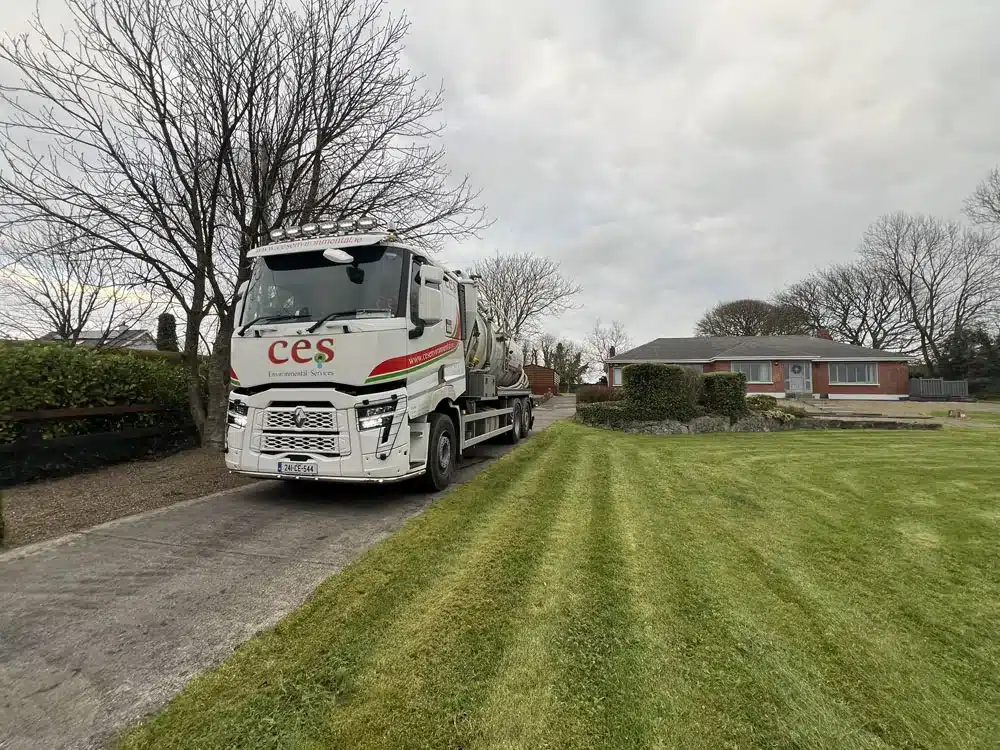
Provide your Eircode, the system type if known, access details and the approximate distance between the tanker parking area and the tank. Leave opening covers and inspecting inside the tank to trained personnel.
Investigate symptoms that remain after emptying
If the drains remain slow after desludging, the pipework or another part of the system may need attention. CES can provide drain cleaning and unblocking and CCTV drain surveys where appropriate.
Book septic tank emptying in Clare, Limerick or Galway
You do not need to wait for warning signs to arrange routine maintenance. Contact CES Environmental Services to book septic tank emptying or describe a problem with your system.
FAQs
Does a septic tank full of water need emptying?
Not necessarily. Liquid is normal in a functioning septic tank. Sludge levels, maintenance history and signs of restricted flow help determine whether desludging or another investigation is needed.
Will emptying stop sewage smells?
It may help if accumulated waste is contributing to the problem. Smells can also arise from blocked drains, ventilation issues or system faults, so persistent odours need investigation.
Can a septic tank need emptying without warning signs?
Yes. Solids can accumulate before obvious symptoms appear. A planned maintenance schedule is more reliable than waiting for a backup.
Is pooling water always caused by the septic tank?
No. Rainwater, saturated ground and other drainage faults may be responsible. Pooling near the system, especially with a sewage smell, should be assessed.